

Trade show booth flooring options: the short answer
Most trade show booths use one of four floor types: carpet, vinyl, interlocking foam tiles or a raised modular floor. Carpet is the default at many shows, vinyl gives a clean, graphic look, and foam tiles add comfort. A raised modular floor is the option to choose when you want cables out of sight, a level surface and a floor you can reuse show after show.
Below we compare the options on comfort, cable management, build-up and reuse, so you can choose the floor that fits your booth and your show schedule.
Carpet
Carpet is soft underfoot, comes in many colors and is easy to order. The downside: cables usually run under it and are secured with tape, which creates bumps and trip hazards. After the show the carpet and tape often end up as waste.
Vinyl and printed floors
Vinyl and printed flooring give a smooth surface with a wood, stone or brand-color look. They need a clean, level base and careful installation, and cables still need a route across the booth.
Interlocking foam tiles
Foam tiles are light and comfortable for booth staff who stand all day. They are not designed to hide cables or to carry heavy displays.
Raised modular flooring
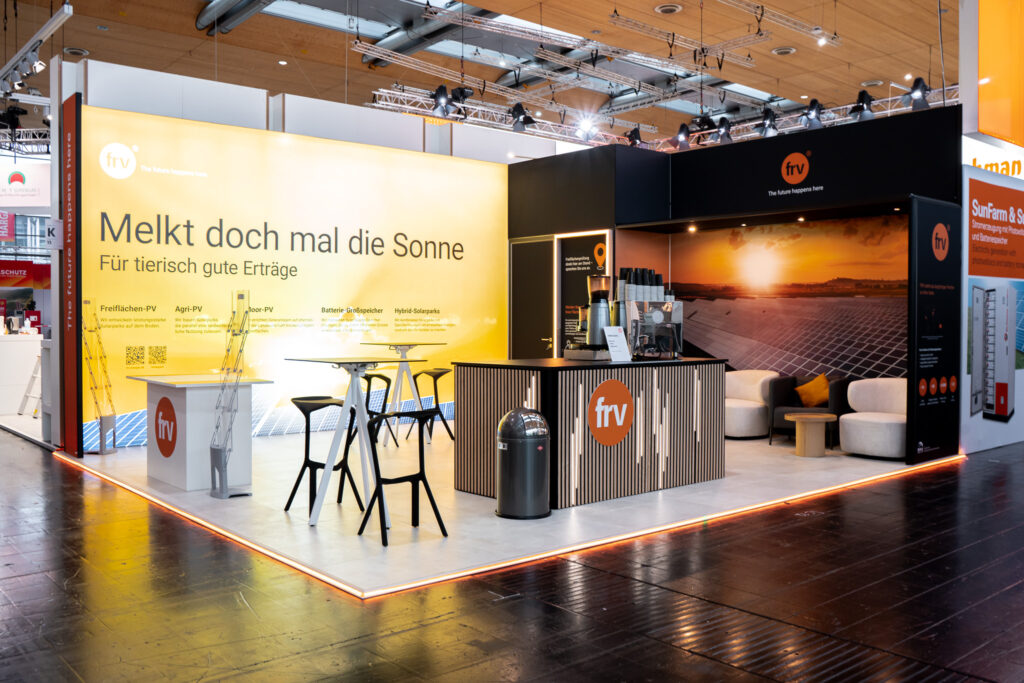
A raised modular floor lifts the booth slightly above the hall floor. The space inside the floor holds power, data and AV cables, so the walking surface stays clean and level. The Stand-On floor is built from 50 × 50 cm tiles that click together by hand, without tools. With cover plates it is 30 mm high, about 1.2 inches.
You choose the finish with the cover plates: a direct print, clear covers, carpet, vinyl or wooden panels. Sloping edges give a smooth transition to the hall floor, and the floor is wheelchair-friendly.
What drives the cost of booth flooring
There is no single price for booth flooring. The cost depends on the booth size, the finish, how much cabling you need, transport, installation and whether you rent or buy. Carpet is often ordered per show. A reusable modular floor is bought once and used again at every show, or rented when you need it for a single event.
For a Stand-On floor, you design the layout in the online configurator and request a price for your size.
Installing a raised booth floor
Raised flooring has a reputation for long installs, but a click system changes that. Stand-On tiles connect by hand with clickers, and triangular nocks level the surface. Cables are laid into the channels from the top before the cover plates go on. Teardown works the same way in reverse: release the clickers, stack the tiles and pack them into the container boxes.
How to choose
Ask four questions. How much power and data does the booth need? Will you exhibit more than once? Do you need a specific look or brand print? And who builds the booth? If the booth has counters, screens or lighting, if you exhibit regularly or if your own crew installs the booth, a raised modular floor is usually the most practical choice. Always check the show’s exhibitor manual for flooring, edge and ramp rules.
Why exhibitors choose Stand-On
Each tile weighs 1.5 kg and one person can install the floor. The floor carries up to 3,600 kg/m², is tested to fire class B1 by TÜV Rheinland and comes with a lifetime warranty. Tiles ship in wheeled container boxes of 50 m² (200 tiles) or 25 m² (100 tiles), or on pallets. It is a Dutch product, shipped worldwide, and you can buy or rent it.
Frequently asked questions about trade show booth flooring
What are the main trade show booth flooring options?
Carpet, vinyl or printed flooring, interlocking foam tiles and a raised modular floor.
When is a raised floor worth it?
When the booth needs power, data or lighting, when you exhibit more than once, or when you want a level, finished surface without cables or tape on top.
How high is the Stand-On floor?
30 mm with cover plate, about 1.2 inches; 26 mm without cover plate.
Can I still have carpet on a raised floor?
Yes. Carpet is one of the cover options, next to direct print, clear covers, vinyl and wooden panels.
Is a raised booth floor accessible?
The Stand-On floor is low, has sloping edges for a smooth transition and is wheelchair-friendly. Check the exhibitor manual of your show for its specific edge and ramp rules.
Do I need tools to install it?
No. The tiles click together by hand, and one person can install the floor.
How much weight can the floor carry?
Up to 3,600 kg/m², or 900 kg per tile.
How is the floor shipped?
In wheeled container boxes of 50 m² (200 tiles) or 25 m² (100 tiles), or on pallets.
Can I rent instead of buy?
Yes. The floor is available to buy or rent. Configure your floor online or contact us for a quote.
More questions? Contact us or configure your floor in the online configurator.